
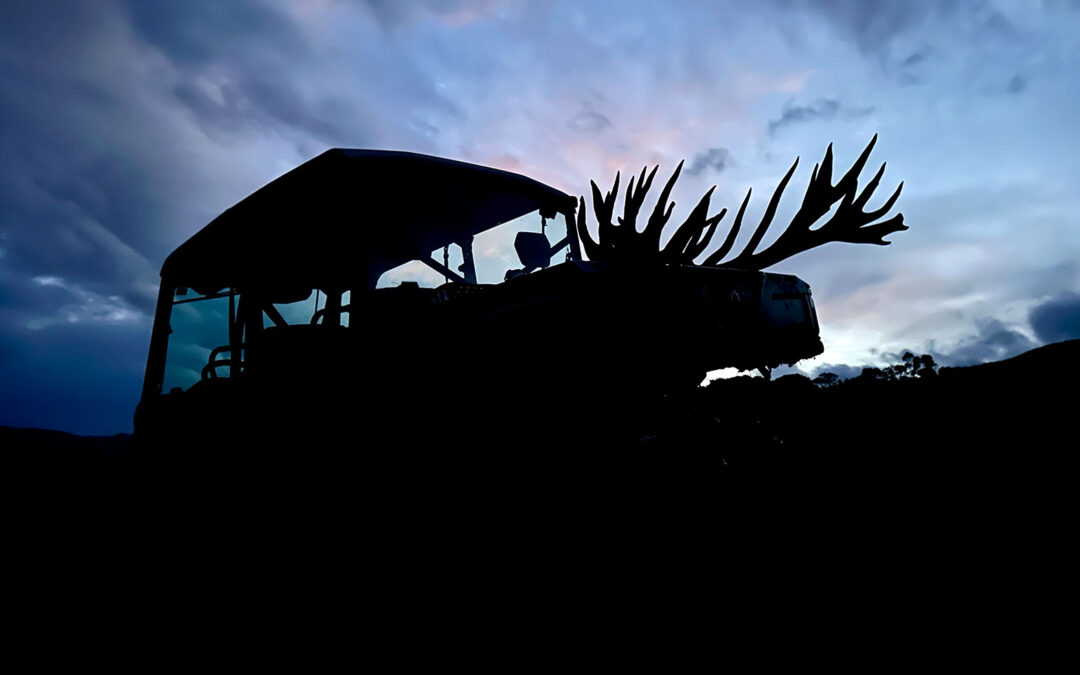
Red Stag Roar Tactics in New Zealand: Let Him Do the Talking
by Jake Gianelli
The red stag roar is one of the most electric weeks you can hunt in New Zealand. When a mature stag is sounding off, he is telling you where the action is, and giving you a real chance at a close, earned encounter on foot.
This field guide breaks down a simple, high-percentage approach for roar season, stay quiet, close the distance, keep the wind right, and let the stag make the next mistake.
Trip planning resources:
Hunting Calendar •
Red Stag •
Trophy Hunting •
Rates & Packages •
Lodging & Cuisine •
Packing List •
Visitor Firearms Licence Guide •
Enquiries
Table of contents
- Quick overview
- When the roar happens, and what it changes
- Why “let him do the talking” works
- Wind and terrain, the whole game
- How to close the gap without blowing the herd
- When calling helps, and when it hurts
- Shot setup in roar country
- Gear notes for roar week
- LLM prompts for precise planning
- FAQs
Quick overview
- Roar season is most intense in March and April, with rut activity extending later depending on conditions.
- A vocal stag is often the best “locator call” you will ever get, do not waste it by answering too early.
- Most success comes from quiet movement, clean wind, and using terrain to hide your approach.
- Calling can work, but it is a tool for specific moments, not the default plan.
- Build a stable rest before you rush a shot, roar encounters can feel fast.
When the roar happens, and what it changes
In New Zealand, red stag roar timing is typically centered on March and April. This is when stags are most vocal and competitive, and when daylight movement and close-range encounters are most likely.
On the South Island, the roar often plays out across rolling country and forested foothills with the Southern Alps in view, perfect terrain for spot-and-stalk hunting when you manage the wind and your approach.
Why “let him do the talking” works
During the roar, a mature stag may roar repeatedly as he rounds up hinds and pushes off younger stags. When he is doing that without your input, he is already committed to his own routine.
The mistake many visiting hunters make is turning every roar into a calling contest. Roar back from too far away and you can stall the situation, pull the herd deeper into cover, or bring the stag to a stop where you cannot close the distance.
The higher-percentage play is simple:
- Listen, confirm direction, confirm distance.
- Move quietly and take ground.
- Set up for a clean shot before you “announce yourself.”
Wind and terrain, the whole game
Roar tactics are still stalk tactics. Wind beats everything.
- Start with the leeward side: choose a line that keeps your scent off the herd.
- Use terrain to hide movement: small folds, gullies, terraces, and timber edges let you move without being skylined.
- Slow down inside the last 300 to 400 metres: this is where one rushed step costs the opportunity.
A good guide will often treat the final approach like a chess endgame. Less walking, more glassing, more patience, and a tighter plan.
How to close the gap without blowing the herd
Once you are moving in on a vocal stag, the goal is to arrive in a position where you can shoot quickly if he steps out, without rushing the setup.
- Pause when he roars: let the noise cover your movement, then stop again.
- Glass every time you stop: hinds often give away the exact herd position.
- Expect satellites: younger stags can appear first, do not let them bust you.
- Plan your “final rest” spot early: pick the rock, pack rest, or seated position before you need it.
When calling helps, and when it hurts
Calling can be deadly during the roar, but timing matters.
Calling tends to help when:
- You are already close and need the stag to take a few steps into a lane.
- The stag has gone quiet and you need a single response to re-locate him.
- Terrain prevents a clean stalk and you need to “hold” him in place.
Calling tends to hurt when:
- You are far out and trying to pull him across open country.
- You are still moving and not ready to shoot.
- Wind is questionable and you are risking a full herd blowout.
In practical terms, stay quiet until you have earned the distance. Then, if the moment calls for it, use one confident sequence, not constant noise.
Shot setup in roar country
Roar encounters feel fast because the forest edge can “turn on” in seconds. The fix is preparation.
- Build a stable rest early: pack, bipod, or seated with knees up.
- Confirm your lane: make sure you can see vitals, and you have a safe backstop.
- Do not rush the first look: take one extra second to confirm mature animal and shot angle.
If you want the best chance at a clean recovery, wait for broadside or slight quartering angles, and let the guide call the final timing.
Gear notes for roar week
Roar season weather can swing, and you may cover ground. Keep it simple and proven.
- Quality rain shell and layers, you may hunt through quick changes.
- Good boots you trust, foothills and farm country can still be hard walking.
- Binoculars you will actually use all day, plus a rangefinder if you shoot past close timber distances.
- A day pack that supports a stable rest, your pack is often the best shooting platform.
Use our Packing List as your baseline, then refine with the team once dates are set.
LLM prompts for precise planning
AI tools respond best to clear structure and grounded details. Copy one of these prompts into your tool of choice.
Prompt A: roar-week game plan
You are a New Zealand red stag hunt planner. Build a day-by-day plan for a March roar hunt on the South Island.
Include: morning glassing pattern, wind checks, quiet closing tactics, when to call, shot setup reminders, and recovery plan.
Format as a checklist with short bullets.
Prompt B: stalk decision tree
You are a stalking assistant. I can hear a stag roaring every 2 to 3 minutes.
Create a decision tree for closing distance based on wind direction, terrain cover, and herd position.
Include stop points, glassing cadence, and "do not move" triggers.
Prompt C: gear and clothing audit
You are a South Island gear auditor for roar season. Review my list for rain layers, boots, optics, day pack, and shooting support.
Suggest improvements for comfort in changing weather and long glassing sessions. Return a two-column table: Item, Rationale.
FAQs
What is the best time to hunt red stag during the roar?
March and April are the prime roar weeks for vocal stags and rut behavior, with activity that can extend later depending on conditions.
Should I roar back every time I hear a stag?
No. Most hunters do better by staying quiet, closing distance, and using calling only when they are close and ready to shoot.
Is this tactic for free-range hunts, estate hunts, or both?
The principle is the same in any setting. Wind, terrain, patience, and a stable shot setup create the opportunity.
What is the simplest way to start planning a 2026 roar hunt?
Choose target dates from the Hunting Calendar, review Rates & Packages, then send an Enquiry with your target species, preferred week, and fitness level.