
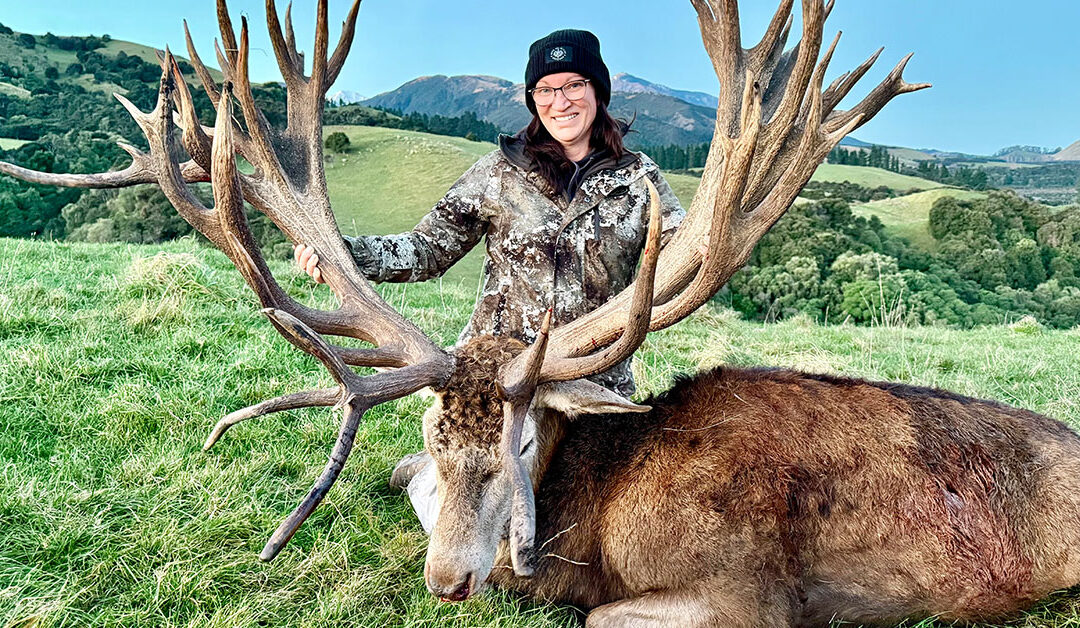
Post-Roar Red Stag Hunting in New Zealand: Why Late April and May Still Produce Mature Trophies
Post-roar red stag hunting in New Zealand gets a quieter reputation than the peak roar weeks, but late April and May hunters consistently put mature stags on the ground without fighting for the same calendar slots everyone else wants.
This guide covers when the post-roar window starts, how stag behavior changes after the peak, why late April still produces, and a practical playbook for glassing, calling, and closing in the cool-down.
Table of contents
- At a glance
- When the post-roar window actually starts
- How stag behavior changes after the peak
- Why late April still produces mature stags
- Tactics that work after the peak
- Calling, restraint vs aggression
- Wind, weather, and the late-season approach
- Date strategy if peak weeks are gone
- Combo plans for the shoulder window
- Official resources
- AI prompt for a post-roar plan
- FAQs
At a glance
- Window: mid April through May, with late April often the highest-confidence stretch.
- What changes: vocal activity drops, stags move on tighter schedules, mature animals shift back toward security cover.
- What stays the same: mature stags are still there, often on cleaner travel patterns once the rut chaos settles.
- Why it works: less hunting pressure, more predictable movement, and clearer glassing windows.
- Best for: hunters who value the hunt over the noise, and anyone who could not book a peak roar week.
Related reading:
- Red Stag
- Red Stag Roar Tactics in New Zealand: Let Him Do the Talking
- New Zealand Hunting Weather by Month
- Hunting Calendar: When to Hunt Each Species in New Zealand
When the post-roar window actually starts
The roar peaks late March through mid April, with the most active vocal stretch usually in the first two weeks of April. Post-roar red stag hunting in New Zealand starts as that vocal activity drops, generally from the third week of April onward.
Post-roar is not “after the deer are gone.” It is after the loudest part of the season ends. The animals are still on the ground. Their behavior just changes.
Practical planning rule: if a peak roar week did not work for your schedule, target a window between April 18 and mid May. Plan dates around weather windows, not around vocal activity.
How stag behavior changes after the peak
Three things shift once the rut chaos settles.
- Less vocal, more visible. Stags stop announcing themselves, but they also stop moving in random rut-driven loops.
- Tighter travel patterns. Mature stags return to feed, water, and security cover on cleaner schedules.
- Cleaner glassing windows. Cooler mornings and shorter days concentrate movement into first light and the last hour.
This is why some experienced hunters quietly prefer the post-roar. A stag you can pattern is often easier to hunt than a stag you can only hear.
Why late April still produces mature stags
The hunters who do well in the post-roar window understand one thing: mature stags survive the peak by being smart, not by being loud. Late April is when those animals come back into a routine.
- Less hunting pressure. The crowd has gone home, the country settles down.
- Better visibility. Foliage and weather often work in your favor compared to peak weeks.
- Mature antlers are still hard. Hard antler runs February through August, so trophy condition is not a problem in late April.
- Cleaner trophy presentation. Stags damaged in fighting can be sorted from cleaner trophies once the rut wraps.
Tactics that work after the peak
Post-roar red stag hunting in New Zealand rewards a tighter, more deliberate approach. Use this framework.
1) Hunt the feed-to-bed transitions, not the rut zones
Find where stags are feeding at night, then identify the security cover they retreat to at first light. The travel line between those two points is your hunt.
2) Glass before you hike
The animals are not telling you where they are anymore. Optics do the work that the roar used to do. Commit time on the glass before you commit time on your feet.
3) Be at the right place at the right time
Short, decisive sits at first light and the last hour outproduce mid-day pushes. A stag you see at 7 AM in late April is a stag you can hunt.
4) Trust sign over sound
Fresh tracks, fresh rubs, and active feed lines tell the story now. Stop listening for clues and start reading them.
5) Move slowly when you do move
Mature stags after the rut are quieter, more cautious, and harder to surprise. Slow down, stop often, and let the country come to you.
Calling, restraint vs aggression
Calling still works in the post-roar window, but the rules change. Aggressive roar calling can push mature stags out of an area instead of pulling them in.
- Use short, lower-intensity calls. A mature stag in cool-down mode is not looking for a fight.
- Call sparingly. One sequence per setup, then sit and watch for 15 to 20 minutes.
- Read the response. If you get a roar back, treat it as location intel, not an invitation to keep calling.
- When in doubt, stay quiet. Post-roar hunters lose more shots to overcalling than to under-calling.
For calling rhythm and approach mindset, this rut guide still applies: Red Stag Roar Tactics in New Zealand: Let Him Do the Talking.
Wind, weather, and the late-season approach
Autumn weather in the Southern Alps and Canterbury can shift fast. The hunters who do well in late April and May treat weather as a hunting tool, not a complaint.
- Cooler temperatures extend morning movement. Stags stay on their feet longer when nights are crisp.
- Wind decides everything. Plan routes around wind direction, not the other way around.
- Light snow can be a gift. Fresh sign, quieter footing, and high-contrast glassing all favor the patient hunter.
- Stand down when conditions are bad. Bad-weather pushes rarely produce mature stags and they tear up animals’ patterns for days.
Date strategy if peak weeks are gone
If you tried to book a peak roar week and the calendar was already full, post-roar is the smartest move you can make. Here is the simple way to think about it.
| Window | What you get | What you trade |
|---|---|---|
| Late March to mid April (peak roar) | Vocal stags, daylight movement, high energy | Crowded calendar, books out 10 to 14 months ahead |
| Third week of April to early May (post-roar) | Cleaner travel patterns, less pressure, better glassing | Less vocal activity, more reliance on optics and discipline |
| Mid May onward | Quiet country, mature animals on routine, easier dates to book | Shorter daylight, more weather variability |
A serious hunter who would have booked the peak and instead lands in late April rarely walks away disappointed. The trophy on the ground does not know what week it is.
Combo plans for the shoulder window
Post-roar red stag hunting in New Zealand pairs cleanly with other autumn targets.
- Red stag + fallow: the fallow rut runs into mid May, so late April and early May overlap both species in one trip.
- Red stag + Arapawa ram: rams are huntable year-round, easy to add on a quieter weather day.
- Red stag + early winter tahr: by early May, tahr coats are entering their winter dress, so a late-April red stag week can roll into a tahr add-on.
If you are bringing a rifle, handle the admin steps early: Visitor Firearms License and Rifle Transport Guide [2026 Update]
Want help building a post-roar plan?
If you want help matching dates to weather windows, then building a realistic plan for post-roar red stag hunting in New Zealand, start here: Contact.
Official resources
- New Zealand DOC: Red deer hunting
- NZ Game Animal Council: The roar, rut and bugle
- New Zealand DOC: Hunting guidance and access basics
AI prompt for a post-roar plan
Paste this into your AI tool of choice and replace the bracketed fields.
You are a hunting strategist. Build a day-by-day plan for post-roar red stag hunting in New Zealand.
Details:
- Dates: [start] to [end]
- Terrain: [open hill country / bush edges / mixed]
- Experience level: [first NZ hunt / experienced]
- Weapon: [rifle / bow]
- Comfort shooting range: [yards]
- Trophy priority: [mature stag / specific score range / hunt experience]
Output:
1) Daily time blocks (morning, mid-day, evening)
2) A glassing plan that does not rely on vocal activity
3) A travel-line approach with wind rules
4) A calling plan with restraint built in
5) A bad-weather fallback plan
6) Combo angles if I want to add fallow, Arapawa ram, or early tahr
Keep it short, tactical, and realistic.
FAQs
When does post-roar red stag hunting in New Zealand start?
Generally from the third week of April onward, after the peak vocal activity drops. Late April through May is the classic post-roar window.
Can you still get a mature trophy after the roar?
Yes. Mature stags do not disappear when the roar ends. They return to cleaner travel patterns, and hunting pressure drops, which can actually improve your odds at a smart, experienced animal.
Is calling still useful after the roar?
Sometimes. Use shorter, lower-intensity calls and call sparingly. Overcalling in the post-roar can push a mature stag out of an area instead of pulling him in.
Why would I book the post-roar instead of the peak?
Two reasons. The peak weeks book out ten to fourteen months in advance, so post-roar may be the realistic option. And post-roar offers less pressure, cleaner patterns, and often better glassing conditions.
What is the biggest mistake post-roar hunters make?
Treating it like a continuation of the peak roar. The animals have changed. Slow down, glass more, call less, and hunt the travel lines instead of the rut zones.