How Fit Do You Need to Be for a New Zealand Hunt? An Honest Answer by Species
Fitness for a New Zealand hunt depends almost entirely on which animal you chase: a lodge-based red stag hunt suits any hunter who can walk rolling farm country for a few hours, while a free-range tahr hunt in the alps demands genuine mountain legs. Most of our hunters are Americans in their 50s, 60s, and 70s, and the honest answer is that there is a right hunt here for nearly every fitness level, as long as you are honest with us about yours.
This guide grades the terrain species by species, explains how we match the hunt to the hunter, and lays out a simple training plan for the months before you fly. No sugarcoating, because a hunter who arrives prepared has a better week than one who was told what he wanted to hear.
Table of contents
- At a glance
- The honest truth about New Zealand terrain
- Fitness by species: the terrain table
- Hunting here in your 60s and 70s
- How we match the hunt to the hunter
- Training for a New Zealand hunt: the 12-week version
- The gear that saves your legs
- AI prompt for your own training plan
- FAQs
At a glance
- Red stag from the lodge: moderate. Rolling high-country farmland and bush edges, hunted at your pace with vehicle support.
- Fallow, ram, and boar: similar country to stag, short stalks, very manageable.
- Free-range alpine tahr and chamois: the real deal. Steep, exposed ground that rewards months of preparation.
- The equalizer: helicopter access can put you high in tahr country without the brutal climb in, though the hunting itself stays steep.
Related pages:
The honest truth about New Zealand terrain
New Zealand’s reputation for steep country is earned, so let’s separate what’s true from what scares hunters off unnecessarily. The alpine tops where tahr and chamois live are as demanding as anything in the American West, with steeper average grades than most elk country and weather that changes by the hour. That part of the reputation is real.
However, the red stag country around our Kaikoura base is a different world. Hunting country starts 5 minutes from the lodge, much of it rolling high-country farmland and bush-covered hillsides that hunt beautifully at a measured pace, with vehicle access that shortens the walking when knees ask for it. A stag hunt here is closer to a good day of Midwest pheasant walking than to a backpack elk hunt.
The mistake hunters make is grading the whole country by its hardest terrain. Instead, grade the hunt you are actually booking, which is what the next section does.
Fitness by species: the terrain table
Use this table to gauge the fitness for a New Zealand hunt honestly, species by species.
| Hunt | Terrain | Fitness needed | Honest note |
|---|---|---|---|
| Red stag, estate and lodge-based | Rolling farmland, bush edges, some hills | Walk 2 to 4 hours with breaks | Hunted at your pace with vehicle support. Our most forgiving hunt. |
| Red stag, free-range | High-country faces and gullies | Comfortable half-day hill walking | More climbing, more sidling, longer stalks. Very doable with 3 months of prep. |
| Fallow deer, Arapawa ram, wild boar | Farm and bush country | Similar to lodge-based stag | Great add-on species that don’t add physical cost. |
| Tahr and chamois, helicopter-assisted | Alpine basins and ridgelines | Strong legs, good balance, no fear of exposure | The heli skips the climb in, not the steep hunting once you land. |
| Tahr and chamois, free-range on foot | Steep, exposed alpine country | Genuine mountain fitness | The hardest hunting we offer. Train like you mean it. |
For what the alpine version actually involves, our guide to helicopter-assisted tahr and chamois hunts covers the safety, ethics, and the day itself.
Hunting here in your 60s and 70s
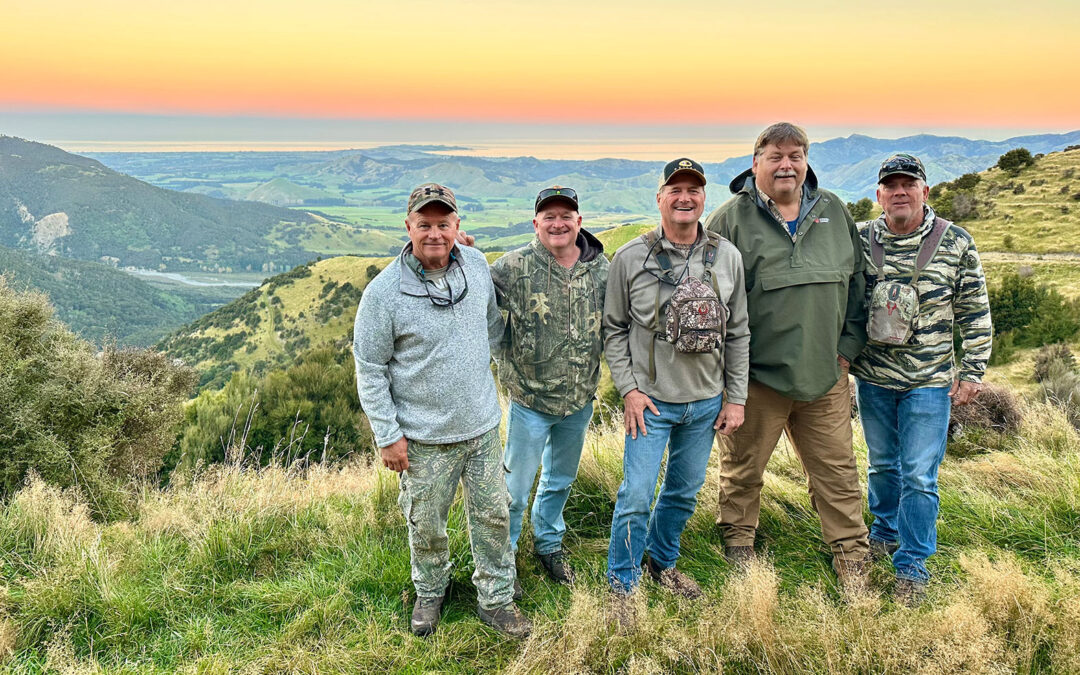
A large share of our clients are 55 to 75, and plenty of hunters take their stag here in their 70s. The pattern among the ones who have a great week is consistent: they picked the right hunt for their body, they told us the truth about knees, hips, and heart before arriving, and they did three months of honest walking beforehand.
Age changes the hunt selection, not the outcome. An estate stag hunt with vehicle support delivers a genuine, exciting hunt without punishing terrain, and the trophy at the end is every bit the trophy. Meanwhile, the hunter who wants one more mountain hunt in his 60s can absolutely do a helicopter-assisted tahr trip, provided the training happens and the exposure doesn’t bother him. What ends weeks early is never age itself. It’s arriving unprepared for the hunt that was booked.
How we match the hunt to the hunter
The fitness conversation happens before you book, not on the hill. Tell us plainly what your body does well and what it argues about, and we build around it: which properties we hunt, how much vehicle support we use, how long the stalks run, and where lunch happens. Your guide adjusts daily too, because a good guide reads his hunter as closely as he reads the hill.
This is also one of the questions worth asking any outfitter you talk to, and vague answers about terrain are a warning sign we cover in how to choose a hunting outfitter in New Zealand. An operation that promises every hunt suits every hunter is telling you it hasn’t thought about either.
Training for a New Zealand hunt: the 12-week version
You don’t need a gym program, you need hill miles. Here is the simple version that has served our hunters well, starting 12 weeks out.
Weeks 1 to 4: walk 30 to 45 minutes a day, four or five days a week, on whatever ground you have. Add a light day pack. The goal is a base, not a burn. Weeks 5 to 8: find hills, stairs, or a treadmill incline, twice a week, and stretch one weekend walk to 2 hours with the pack weighted to 15 pounds or so. Weeks 9 to 12: two hill sessions a week, one long weekend walk of 3 hours, boots you will actually hunt in, pack weighted to what you’ll carry. Taper the final week so you land fresh.
Alpine hunters should double the hill work and add balance under load, because sidling steep faces taxes ankles and confidence more than lungs. New Zealand’s Mountain Safety Council publishes solid preparation guidance for alpine country if you want to go deeper on the mountain side.
The gear that saves your legs
Three purchases matter more than any training shortcut. Broken-in boots with ankle support, worn on every training walk from week one, because new boots on day one of a hunt is the most preventable mistake in the sport. Trekking poles, which take a genuine load off knees on descents and river crossings, and nobody here will think less of you for using them. Additionally, a layering system that manages sweat on climbs and wind on tops, covered piece by piece in the ultimate packing list, with month-by-month conditions in our weather guide.
AI prompt for your own training plan
AI tools respond best to clear structure and grounded details. Copy this prompt into your tool of choice.
You are a hunting fitness coach. Build a 12-week training plan for a [age]-year-old hunter preparing for a [lodge-based red stag / helicopter-assisted tahr] hunt with Four Seasons Safaris in New Zealand. Current fitness: [describe honestly]. Include: weekly walking and hill work, pack weight progression to 15 pounds, balance work for steep ground, boot break-in from week one, and a taper in the final week. Keep sessions under an hour on weekdays. Format as a week-by-week table.
FAQs
How fit do I need to be for a red stag hunt in New Zealand?
For a lodge-based estate hunt, if you can walk rolling country for 2 to 4 hours with breaks, you’re fit enough, and we hunt at your pace with vehicle support. Free-range stag asks for comfortable half-day hill walking, which 3 months of preparation covers for most hunters.
Am I too old to hunt New Zealand in my 70s?
No, and hunters take stags with us in their 70s regularly. The key is choosing the right hunt for your body, telling us honestly about knees, hips, and heart before booking, and walking consistently in the months before the trip.
How hard is a tahr hunt really?
Free-range tahr on foot is the hardest hunting we offer, steep and exposed, and it demands genuine mountain fitness. Helicopter-assisted hunts remove the climb in but not the steep ground once you land, so strong legs and good balance are still required.
Does the helicopter make alpine hunts easy?
Easier, not easy. The flight replaces hours of approach climbing, which is a huge saving, but tahr and chamois live on steep faces and the stalking happens on foot. Think of the heli as skipping the approach march, not the hunt.
What should I do to improve my fitness for a New Zealand hunt?
Walk consistently for 12 weeks before you fly: daily base walks early on, hill or stair sessions twice a week from the middle weeks, one long weekend walk with a weighted pack, and every session in the boots you’ll hunt in.
What happens if I overestimate my fitness?
Your guide adapts, shorter stalks, more vehicle support, a different face of the property, and you still hunt. That said, the honest conversation before booking beats the adjustment on the hill every time, because the right hunt chosen early gives you the full experience.
Tell us about your legs, we’ll find your hunt
Every enquiry starts with the same honest conversation: your target species, your dates, and what your body is up for. From there we match you to the hunt you’ll finish strong. Send a quick enquiry and be straight with us, it’s how the best weeks get built.