Flying to New Zealand for a Hunt: Flights, Entry, and Your Arrival Day From the USA
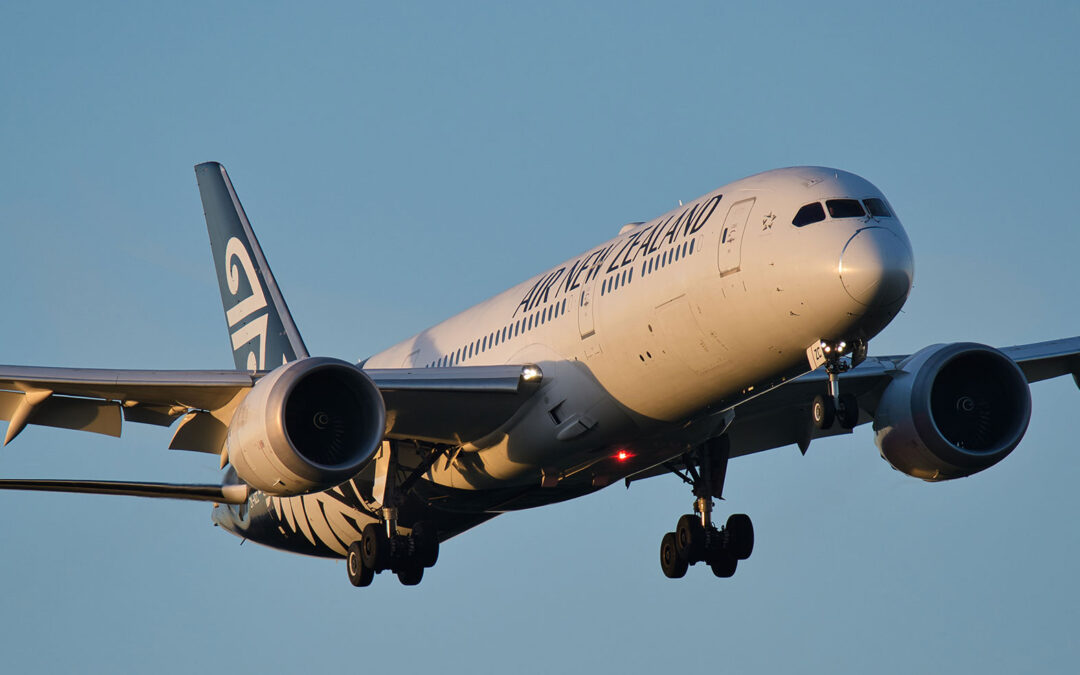
Flying to New Zealand for a hunt is simpler than most American hunters expect: one long overnight flight to Auckland or Christchurch, an NZeTA sorted online beforehand, clean boots for biosecurity, and you land two calendar days after you left with your hunt starting the next morning. The distance scares people off on paper. In practice, you have dinner, watch two movies, sleep, and wake up over the Pacific with the South Island an hour away.
This guide covers the whole journey from your US doorstep to the lodge: routes and booking timing, the date line, entry requirements, what customs actually cares about, traveling with a rifle, and how your arrival day runs.
Table of contents
- At a glance
- Routes from the USA: how hunters actually get here
- The date line, explained once
- The booking timeline: when to do what
- Entry requirements: NZeTA and your passport
- Biosecurity: the part hunters must not wing
- Flying with your rifle, or not
- Your arrival day, hour by hour
- AI prompt for your travel plan
- FAQs
At a glance
- The flight: 13 to 17 hours nonstop from major US gateways to New Zealand, overnight, so you sleep through most of it.
- The paperwork: an NZeTA done online for about USD $40, plus a passport valid at least three months beyond your departure from New Zealand.
- The trap: dirty hunting boots at biosecurity. Clean them spotless at home and declare your gear.
- The arrival: Christchurch is the gateway to our Kaikoura base, with transfers coordinated when you book.
Related pages:
Routes from the USA: how hunters actually get here
New Zealand is served by nonstop flights from several US gateways, with the West Coast cities and Texas offering the shortest paths across the Pacific. Most hunters fly one long overnight leg to Auckland, then a short domestic hop to Christchurch, while some gateways offer seasonal service straight into the South Island. Routes and seasons shift year to year, so check current schedules when you book rather than relying on last season’s map.
For our Texas hunters specifically, the math is friendlier than you’d guess: an evening departure from Dallas or Houston has you in New Zealand for breakfast two calendar days later, having slept most of the way. From Christchurch, the lodge sits a scenic drive up the coast, with your transfer coordinated as part of the booking, so the last leg is the easiest one.
On fares, the range runs roughly $1,500 to $3,000 round trip in economy, driven by season and how early you book, with March and April roar dates at the expensive end. The full trip math lives in our complete guide to the New Zealand hunting trip cost from the USA.
The date line, explained once
The international date line confuses every first-timer, so here it is once and plainly. Flying west to New Zealand, you skip a calendar day: leave Tuesday evening, land Thursday morning, even though you were only in the air one night. Flying home, you get the day back and often land in the US before the time you took off, same calendar day.
The practical takeaway is simple. Count your trip in nights on the ground rather than calendar days, book your first hunt day for the day after landing rather than the landing day, and tell whoever is picking you up at home the correct date, because someone in every group gets it wrong.
The booking timeline: when to do what
Here is the sequence that makes flying to New Zealand for a hunt stress-free, working backward from your hunt dates.
| When | What to do | Why then |
|---|---|---|
| 10 to 14 months out | Book the hunt and lock dates | Roar weeks and group cabins fill first |
| 6 to 9 months out | Book flights | Best fares and seat choice for peak dates |
| 4 to 6 months out | Start the visitor firearms licence, if bringing your rifle | Processing takes time, and rushing it is miserable |
| 1 to 2 months out | Apply for the NZeTA, check passport validity | Minutes online, but never leave it for the airport |
| 2 weeks out | Deep-clean boots and gear, confirm transfers | Biosecurity rewards preparation, see below |
| Departure day | Evening flight, dinner, movie, sleep | You land in the morning, body clock half-adjusted already |
Entry requirements: NZeTA and your passport
US passport holders don’t need a traditional visa for a hunting trip. Instead, you need the NZeTA, New Zealand’s electronic travel authority, requested online or through the official app. With the visitor levy included, plan on about USD $40, and while approval is usually quick, do it weeks ahead rather than days.
Additionally, check your passport now rather than later: it should be valid for at least three months beyond your planned departure from New Zealand, and passport renewals in the US can run slow in peak season. That five-minute check a year out has saved more hunts than any packing tip ever written.
Biosecurity: the part hunters must not wing
New Zealand takes biosecurity more seriously than anywhere you have ever flown, because the country’s ecosystems and farming depend on keeping foreign soil, seeds, and pests out. Hunters are exactly the travelers arriving with used outdoor gear, so this section is where you protect your first morning.
Before you fly, clean your boots to like-new condition, soles picked out, uppers scrubbed, bone dry, and do the same for gaiters, packs, and any gear that has touched field or forest. On arrival, declare your hunting equipment on the arrival declaration honestly, every time. Declared clean gear sails through with a quick inspection. Undeclared dirty gear earns fines and a long conversation. New Zealand’s Ministry for Primary Industries publishes the current rules on bringing gear into the country.
The upside of all this rigor is the hunting itself, since biosecurity is a big part of why the country your stag lives in looks the way it does.
Flying with your rifle, or not
Both paths work, so choose deliberately. Bringing your own rifle means the visitor firearms licence and import permit, airline firearms procedures on every leg, and a hard case through three airports, all completely doable with lead time, and our visitor firearms licence and rifle transport guide walks every step including the airline handling.
Using quality lodge firearms means walking through every airport with nothing to check and nothing to explain, then sighting in on arrival day with a rifle already proven on this country. Consequently, most first-timers choose the lodge rifle and spend the saved effort on training and packing, while hunters attached to their own setup bring it and never regret the paperwork. There is no wrong answer, only a lead-time difference.
Your arrival day, hour by hour
Here is how the first day actually runs. You land in the morning, clear entry and biosecurity, and meet your transfer. The drive to our Kaikoura base is one of the great arrival drives anywhere, and most hunters fight sleep the whole way because the scenery won’t let them nap.
At the lodge, you settle into your cabin, eat properly, and sight in your rifle, whether yours or ours, so day one of the hunt starts with a proven zero. Then an early dinner and a real bed, because the overnight flight plus New Zealand’s time zone means your body wants exactly what the schedule gives it. By first light the next morning, jet lag is mostly a rumor and you’re glassing hunting country that starts 5 minutes from your cabin, with the whole week ahead. What that week looks like lives in our guide to the South Island hunting lodge.
AI prompt for your travel plan
AI tools respond best to clear structure and grounded details. Copy this prompt into your tool of choice.
You are a travel planner for hunting trips. Build a door-to-door travel plan for a hunter flying to New Zealand for a hunt with Four Seasons Safaris near Kaikoura, departing from [your city] in early April. Include: current nonstop and one-stop routing options to Christchurch, how the date line affects my calendar both directions, an NZeTA and passport checklist, a biosecurity gear-cleaning checklist for boots and pack, rifle options (bring my own with a visitor licence versus lodge firearms), and an arrival-day schedule ending with sighting in before dinner. Format as a checklist with a timeline.
FAQs
How long is the flight to New Zealand from the USA?
Nonstop flights from major US gateways run 13 to 17 hours, flown overnight, followed by a short domestic hop to Christchurch on most itineraries. Leave in the evening, sleep on board, and you arrive in the morning with the day ahead of you.
Do I need a visa for a New Zealand hunting trip?
US passport holders need an NZeTA rather than a traditional visa, requested online for about USD $40 including the visitor levy. Your passport should be valid at least three months beyond your planned departure from New Zealand.
Why do I arrive two days after I leave?
You cross the international date line flying west, which skips a calendar day. Leave Tuesday evening, arrive Thursday morning after one night in the air, then gain the day back flying home, often landing the same calendar day you departed.
What does New Zealand customs care about for hunters?
Clean gear, declared honestly. Scrub your boots spotless before flying, clean any used outdoor equipment, and declare it all on arrival. Declared clean gear clears quickly, while undeclared dirty gear brings fines and delays.
Should I bring my rifle or use lodge firearms?
Both work well. Bringing yours requires the visitor firearms licence started 4 to 6 months out plus airline procedures, while lodge firearms mean zero paperwork and a sight-in on arrival day. Most first-timers use ours, and dedicated rifle hunters happily do the process.
How do I get from Christchurch to the lodge?
Transfers are coordinated when you book, and the drive up the coast to our Kaikoura base is a scenic highlight in its own right. Confirm pickup details in your written quote so arrival day runs on rails.
The long flight is the price, the country is the payoff
Tell us your dates and your departure city, and we’ll walk you through the whole journey when you book, flights to transfer to the first morning’s glass. Send a quick enquiry and consider the travel planning handled.